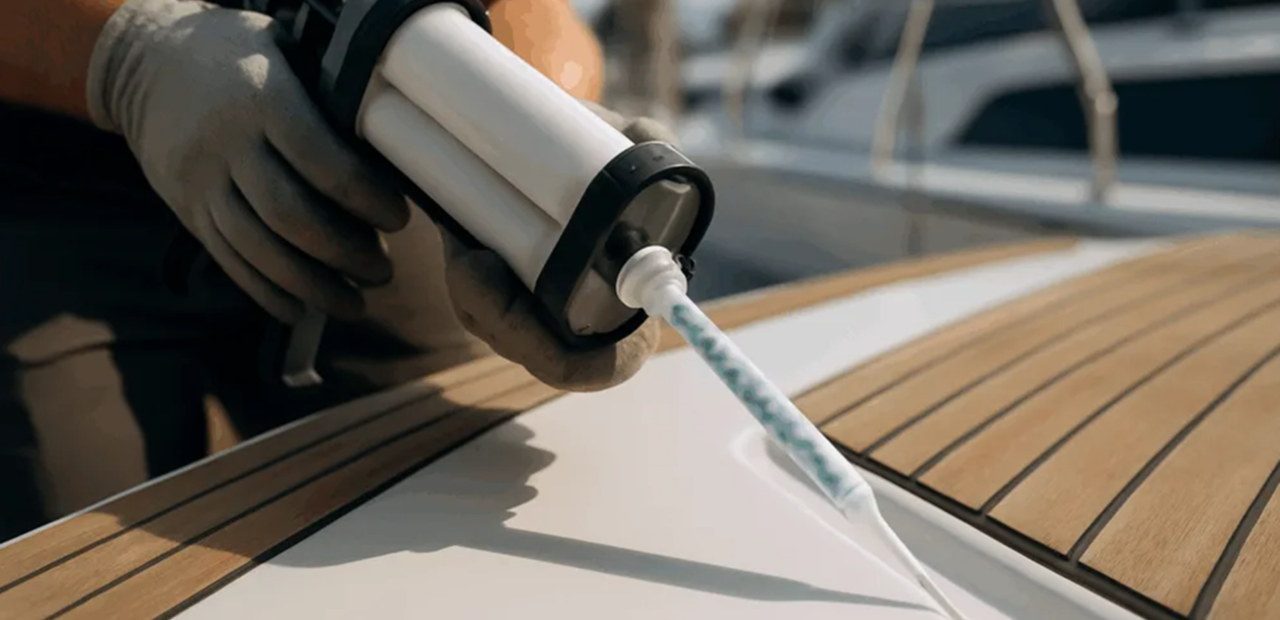
A Closer Look at Marine Bonding: Finding the Right Fit for Your Vessel
 by Thomas Jackon · Oct 26, 2026
Marine environments put considerable demands on the materials used to construct and maintain boats, vessels and coastal structures. Saltwater, ultraviolet (UV) radiation, temperature fluctuations and constant movement can gradually compromise materials that perform perfectly well in sheltered conditions.
Reliable bonding and sealing are therefore essential for maintaining structural integrity, protecting vulnerable joints and keeping moisture away from sensitive areas. Whether the task involves assembling timber components, securing fittings, repairing damaged surfaces or sealing joints around deck hardware, the materials used must withstand the conditions they will encounter.
Selecting an appropriate adhesive or sealant is not simply about achieving a strong initial bond; it is about maintaining performance throughout the service life.
Contents
Marine Adhesives: The Foundation of a Lasting Bond
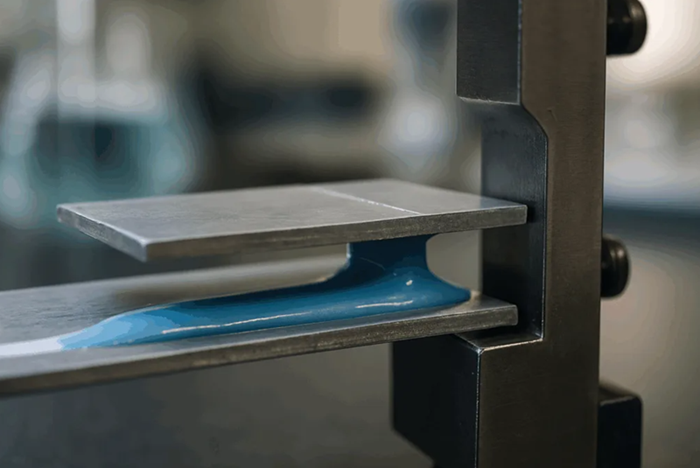
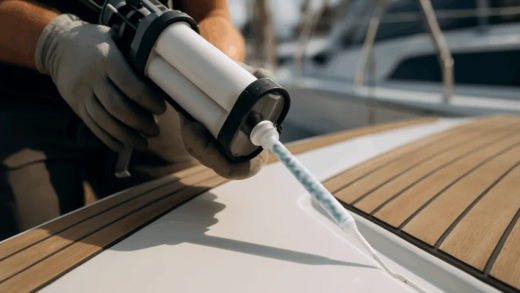
Marine adhesives are formulated for bonding applications in demanding environments where moisture exposure, movement and material compatibility can influence long-term performance. Depending on their chemistry and intended use, they can join different materials, support structural assembly or help secure components exposed to challenging operating conditions.
Deciding on high-strength marine adhesives ensures watertight structural bonding of hull seams, transom mounts, and deck fittings. However, adhesives and sealants serve related but distinct purposes. An adhesive primarily joins surfaces, transferring loads between them, while a sealant fills gaps and prevents water or other substances from passing through joints.
Some formulations perform both functions, making them useful for applications requiring adhesion alongside flexibility. Several factors determine how well a bond performs. Adhesion describes how effectively a material attaches to a surface, while cohesive strength refers to its ability to resist breaking internally.
Flexibility is equally important when bonded components expand, contract or move independently. A rigid bond may suit certain structural applications, whereas a flexible formulation can accommodate movement without immediately losing contact with the adjoining surfaces.
Marine exposure also requires careful consideration. Resistance to saltwater does not automatically mean that a product can withstand continuous immersion, and a waterproof marine adhesive sealant does not necessarily provide sufficient strength for a load-bearing connection. Product specifications must confirm suitability for the intended conditions.
The Right Formula
Different marine sealants offer different performance characteristics, making the choice of formulation particularly important. Polyurethane adhesives are used for applications requiring strong bonding, including timber assembly and wooden boatbuilding.
Certain formulations provide water resistance and can bond closely fitting joints, although their suitability depends on the materials involved and the conditions specified by the manufacturer. Epoxy adhesives are commonly associated with structural bonding, repairs and gap filling.
Depending on the formulation, they can bond materials such as timber, metal, stone and fibreglass. Some specialised systems are designed for damp conditions or underwater repairs, but these capabilities should never be assumed without explicit confirmation in the technical documentation.
Hybrid polymer adhesives offer another option where adhesion and flexibility are required together. Some formulations provide immediate grab, helping hold components in position during installation, while others are designed for more demanding bonding and sealing applications.
Contact adhesives, meanwhile, are useful for particular laminating, upholstery and trim applications where rapid initial adhesion is desirable. Acrylic and cyanoacrylate adhesives also serve specialised purposes, depending on their formulation and the materials being joined.
Neither should automatically be treated as suitable for every marine application. The appropriate choice depends on the substrate, exposure, required bond strength and working conditions. For example, attaching a lightweight trim component is fundamentally different from bonding a structural fitting that experiences repeated loading.
Before You Apply: Five Practical Tips
Even a suitable formulation can perform poorly if the application process is incorrect. Preparation, environmental conditions and curing all influence the finished result. Such tips include:
- Remove contamination before bonding. Clean surfaces according to the manufacturer’s instructions, removing grease, oil, loose material and other contaminants. Use only compatible cleaning products, as aggressive solvents can damage certain plastics, coatings and painted surfaces.
- Prepare smooth surfaces appropriately. Where specified, lightly abrade non-porous materials to improve mechanical adhesion. Remove sanding dust afterwards, and avoid damaging protective coatings or weakening the underlying material.
- Use primers selectively. Some substrates require a compatible primer to promote adhesion. Follow the specified application rate and waiting time.
- Measure two-part systems accurately. Epoxy products containing separate resin and hardener must be mixed in the prescribed ratio. Inaccurate proportions or incomplete mixing can prevent proper curing and compromise the finished bond.
- Allow sufficient curing time. Working time, handling time and full cure are different stages. Temperature, humidity, layer thickness and formulation can affect how quickly a product hardens. Avoid loading, immersing or returning repaired components to service until the manufacturer’s requirements have been met.
Keeping Your Vessel Shipshape, Bond by Bond
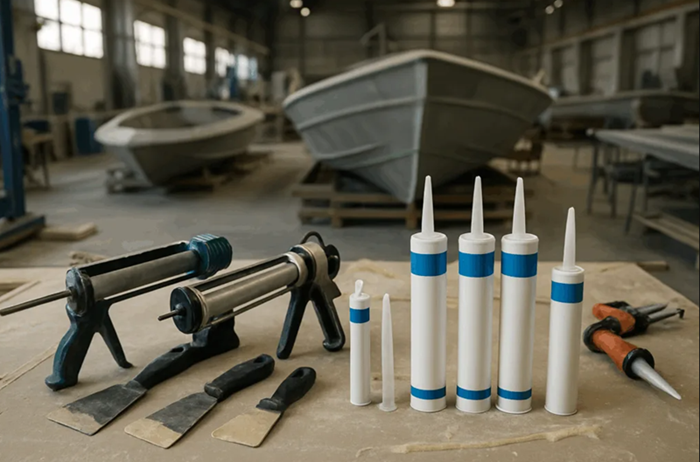
A reliable marine repair begins with understanding what the joint must withstand. The right marine sealant can help join components securely, while a suitable sealant can protect vulnerable connections against water ingress and movement. Neither can compensate for incompatible materials, inadequate preparation or unsuitable application conditions.
Before committing to a product, review its technical data sheet for approved substrates, environmental limitations, application instructions and curing requirements. Pay particular attention to whether the intended application involves intermittent splashes, prolonged exposure to saltwater or continuous immersion. These conditions are not interchangeable.
For structural repairs, load-bearing fittings or work below the waterline, seek qualified marine advice whenever the consequences of failure could affect vessel safety. A carefully selected product, correctly prepared surfaces, and adequate curing time provide a far more dependable foundation than relying on a generic waterproof or high-strength claim.