
The Importance of a Good Guitar Case: Types and Features
 by Thomas Jackon · Sep 22, 2026
Do you really need a guitar case or bag, or is it just another item sellers want you to spend money on? Honestly, you can totally go without buying one, but one bad knock against a doorframe and you’ll wish you’d gotten one sooner. Your guitar goes wherever you go, so protecting it secures its value and keeps it playing right.
Contents
The Importance of a Good Guitar Case
Let’s be honest: guitars are not necessarily cheap, nor are they exactly tough either. If you’ve spent good money on one, or you’ve been gifted it by someone you love, it probably carries sentimental value, so giving it proper protection isn’t optional. It’s just common sense.
Bumps, Drops and Everyday Knocks
Life can get pretty dynamic. You’re carting your guitar to your friend’s place, a gig, or just down the hallway, and all it takes is one clumsy step to knock it against a doorframe and leave a dent or crack that will annoy you every time you play. Look for a sturdy guitar bag that acts as its cushion. It will soak up those knocks before they ever reach the wood.
Weather and Grime Take Their Toll
Although wood is resistant, it’s best that you won’t don’t experiment with how it handles extremes. For instance, when you throw your guitar in a hot car or a damp shed, you may have to deal with warping, cracking, or a tone that just isn’t the same anymore later on.
A good guitar case keeps temperature and humidity swings in check. It also stops dust and muck building up on the finish and hardware, which is one of the things that quietly wrecks a guitar over time if you let it slide.
Keeping It Worth Something
A guitar that’s been looked after simply holds its value better. And if you ever decide to sell up or trade in for something new, buyers notice the difference between a guitar that’s been cared for and one that’s been messed with.
Handy Storage Too
Most decent cases have room for your picks, tuner, capo, and cables, which are all the bits and pieces you need. This way, you won’t have to dig around your separate backpack to find your gear before a gig.
Get yourself a proper case. It’s what keeps your guitar looking and playing better.
The Types of Guitar Cases
There are actually a few different types of guitar bags. Based on their specific characteristics, picking the right one really comes down to how you actually use your guitar day-to-day.
Hard Cases
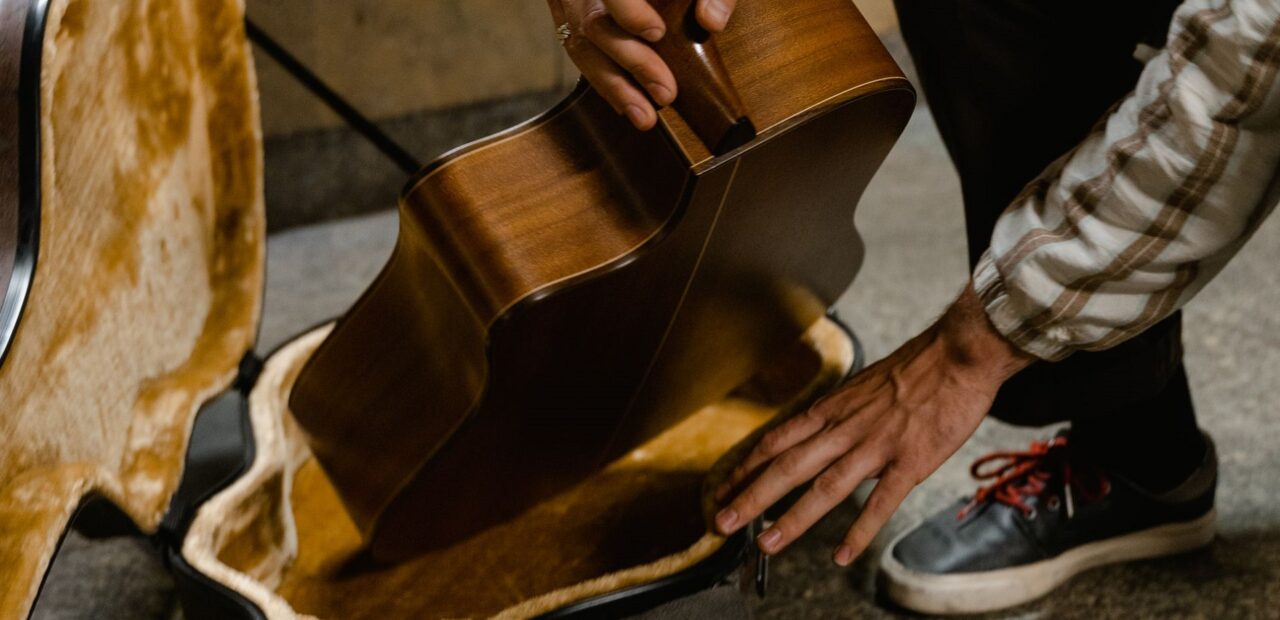
These are the heavy hitters, made like solid shells from either wood, ABS plastic, or fibreglass. Their interior is soft and cushioned, which cradles your guitar properly. They can stand knocks, drops, and rough weather without causing damage to your guitar.
The only downside to a hard case guitar bag is its weight. They can be a bit too heavy to carry around, but if you’re gigging regularly or you’ve got a guitar you genuinely can’t afford to stuff up, this is your best option.
Gig Bags
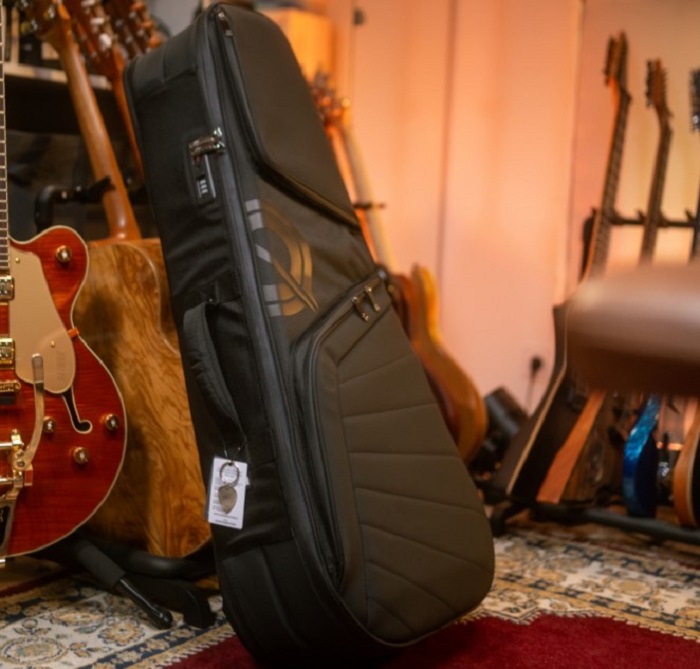
For something light, soft, and easy, opt for gig bags. They are perfect for getting your guitar from A to B without straining your shoulder.
However, you can’t expect hard case-level protection from gig cases for guitar storage. Yes, they’ll do just fine with scratches or bumps, but not a big drop or a scorching hot car. Think of them as a solid choice for students, casual players, or as a backup for the guitar you’re not too worried about.
Hybrid Cases
If you can’t decide between the two, you can look into hybrids. They have more padding and structure than a gig bag, without the heaviness of a full hard case. These are good all-rounders if you travel a bit but don’t need max protection every single time.
Features and Considerations

When you’re going out to buy guitar cases, switch your mindset from looking for the best one to looking for the one that works best specifically for you. It really comes down to what guitar you’re lugging around, how much you’re on the move, and what you’re happy to spend.
Your Guitar Type
If you have an electric guitar, look for a hard case or hybrid guitar bag, as its surface is more sensitive. Acoustics are more fragile with that hollow body, so a hard case is your best bet. Basses need their own case, longer and heavier, hard or hybrid if you’re playing out regularly.
Getting the Size Right
To get your bag right each time, measure the full length of your guitar, the width at the top and bottom, and the body depth, then check those against the case before buying. If you get it wrong, your guitar’s either sliding around or jammed in too tight.
How Much Are You on the Road?
For guitar players who are often travelling, a hard case offers maximum protection. For local gigs and rehearsals, a hybrid or a solid gig bag does the trick.
Match the case to how you actually use your guitar, not what looks flashiest on the shelf.
A proper case is what keeps your guitar sounding and playing right for years down the track. Get the size sorted, pick something that actually matches how you use it, and you’re set.