Exhaust Heat Shield Wraps: The Key for Underbonnet Heat Management
 by Thomas Jackon · Sep 10, 2025
While most Aussie drivers know that heat is an engine’s worst enemy, many aren’t aware of just how much heat their exhaust system produces. That’s why it’s no surprise that so few drivers fully understand the importance of monitoring underbonnet exhaust temperatures.
For well over half a century, race car builders have used high temperature header and collector wraps to limit the amount of heat that’s radiated away from the exhaust system. It’s the everyday advantages that these onetime competition-only wraps have for modern vehicles, however, that’s allowed them to successfully make the jump from high banks to high street. The need to keep exhaust heat locked in the system has never been greater and wraps do it for more reasons than most drivers would imagine.
Contents
Exhaust Wraps Are the Key to Serious Heat Management
Let’s be honest: when it comes to bringing high performance accessories to the street, there aren’t a lot of ADR-approved mods that are affordable, easy to install and can go straight from a race car to a daily driver. High performance exhaust heat shield wraps and covers are standout exceptions, though. Unlike the asbestos- and fibreglass-based wraps used in the 60s and 70s, today’s exhaust system wraps are infinitely safer and more durable than their predecessors.
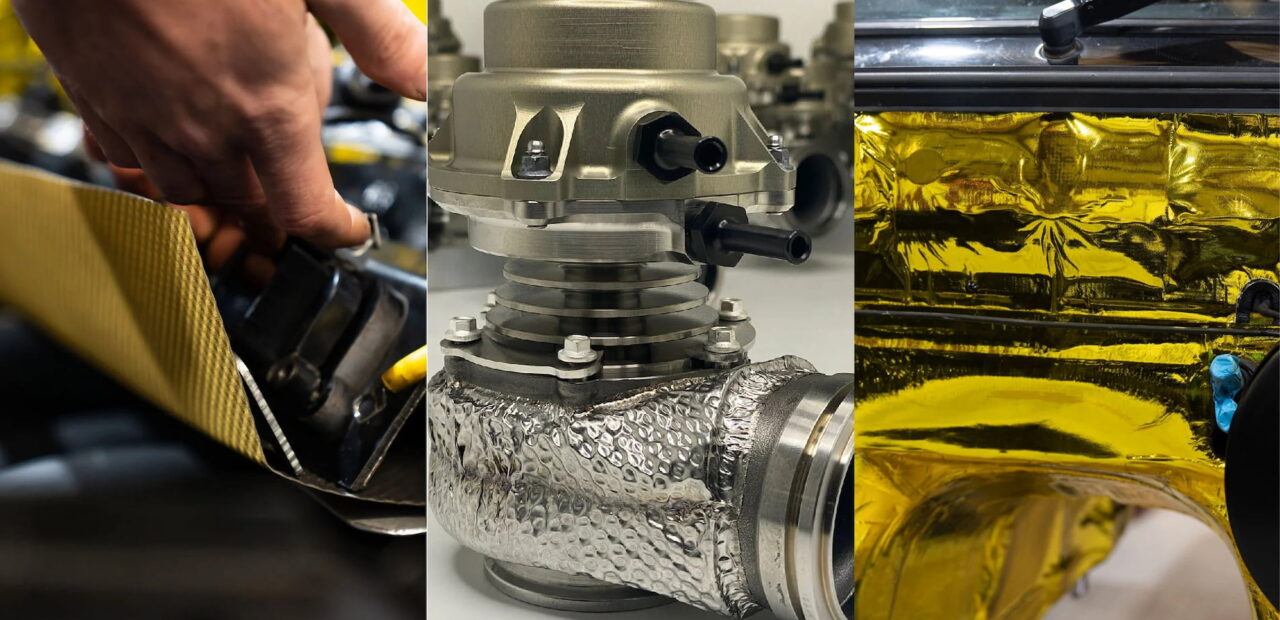
They also do a better job of heat management which, with underbonnet temperatures capable of exceeding 200°C, can deliver a much-appreciated reduction in heat radiating away from the exhaust by as much as 90%. Innovative materials are the key to the efficiency of these modern thermal blocks, with three main types of wraps and shields leading the market:
- High temperature basalt wraps. Durable basalt exhaust system wraps are made from crushed and extruded volcanic rock fibre, and are rated for continuous exhaust tube temperatures up to 700°C, with short duration maximums in excess of 1000°C.
- Embossed aluminium heat shielding. Flexible, corrosion-resistant aluminium shielding is sold in 300mm x 500mm and 500mm x 700mm sheets, is rated for continuous temperature resistance to 650°C, and can be formed and folded around even the most intricate exhaust header and collector exhaust configurations.
- Extreme-duty titanium heat tape. While titanium heat tape is designed primarily for high temperature, forced-induction environments, its tightly woven construction and 1200°C continuous rating make it the optimal choice for the most severe conditions Australia has to offer.
There’s no question about it: with ambient temperatures across Australia regularly exceeding 40°C, the need for car and truck owners to took engine cooling and heat management seriously has never been greater. And while shields and wraps are certainly ideal for protecting sensitive underbonnet electronics from heat-related faults and failure, their most important function is actually in support of the most critical process in an engine’s combustion cycle: exhaust scavenging.
Understanding What Exhaust Wraps Mean For Engine Scavenging
Exhaust scavenging is the process where the vacuum created by spent exhaust gases leaving each cylinder helps to draw the next charge of fresh air and fuel into the cylinders. Heat, which is the most important property of exhaust gas volume, is also the most critical component in efficient scavenging. This is where the heat locking properties of exhaust wraps are most beneficial for:
- Reducing exhaust gas density. By locking heat inside the exhaust system, wraps and shields perform the crucial chore of reducing exhaust density, allowing larger volumes of gas to be evacuated out of the system.
- Increasing exhaust gas flow. Together with a dramatic reduction in density, thermal retention is a key contributor to the natural tendency for gases to flow from high pressure to low pressure, along with the vacuum that is so vital for scavenging.
- Increasing exhaust gas velocity. Gas velocity is as vital for clearing the system of spent gases as it is for vacuum creation. And as retaining heat in the system increases the exhaust’s pressure gradient, it also drives an increase in gas velocity.
Make no mistake: when an engine isn’t scavenging properly, the risk of it experiencing a catastrophic parts failure increases exponentially. And while factors like valve timing, combustion chamber design and camshaft duration will all have an affect on how well an engine scavenges, it’s the heat retention properties of the exhaust system, aided by the insulating properties of exhaust wraps, that do the best job of maximising scavenging efficiency.
Exhaust Wrap Benefits That Go Beyond Scavenging
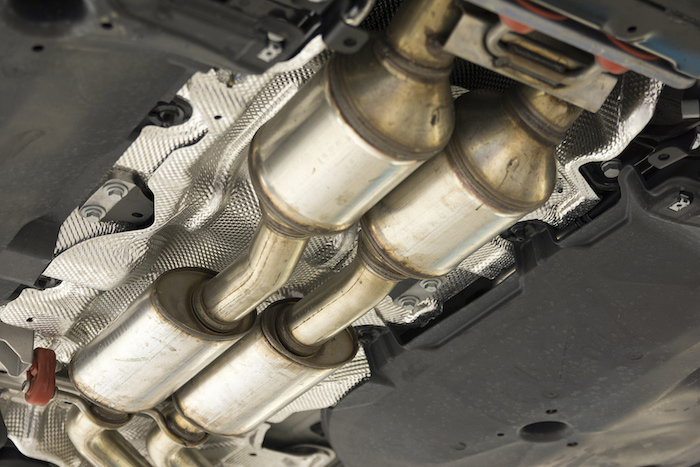
Across the board, the benefits of high temperature exhaust heat shields and exhaust wraps are impossible to ignore, and they include:
- A noticeable increase in engine performance. No matter the size of the engine, heat locking exhaust wraps are guaranteed to deliver a consistent, performance-boosting increase in exhaust velocity and scavenging.
- A modest improvement in fuel consumption. The improvement in fuel consumption may only be minimal, but the denser combustion mixture and increase in engine efficiency means that an engine doesn’t have to work as hard to perform the same work.
- An appreciable reduction in turbo lag. Heat shields and wraps are especially beneficial for turbocharged engines as the increase in exhaust gas velocity is perfect for eliminating low RPM turbo lag and for easier spooling at high RPMs.
- A significant drop in underbonnet temperatures. By reducing heat radiation, exhaust shielding can extend the lifespan of practically every underbonnet electronic component, connector and harness assembly. This is especially important for critical engine electronics like oxygen sensors that are extremely sensitive to heat.
- Performance-inspired aesthetics. No two heat management solutions are the same, which is why few accessories can convey the look or feel of custom high performance the way a rugged exhaust wrap or premium grade heat shield can.
Regardless of the size of a vehicle’s engine, or whether it’s dedicated to on-road, off-road, or competition-only use, exhaust system wraps and heat shields provide a definitive layer of heat management that’s as effective at protecting engines as it is at aiding performance. That’s why like most accessories filling the protection/performance role, there are precautions that need to be taken to ensure both the long-term reliability of the wrap, as well as the integrity of the exhaust system.
The Importance of Periodic Exhaust Wrap Inspections
For all the benefits and advantages that exhaust wraps and heat shields offer for heat management, it’s important to remember that they’re not permanent installations. Vibration, accumulated moisture and severe temperature swings also bring a range of risks to the wraps, including:
- Risk of exhaust rust and corrosion. Water and moisture from the road or from washing can become trapped under the wrap, allowing destructive rust and corrosion to set in on steel exhaust tubes.
- The possibility of hidden damages. Not only can wraps and shields conceal cracks or other damages to exhaust tubes, they can also obscure damaged or leaking filler tubes and engine gaskets.
- The potential for fire hazards. Oil, grease and petrol spills can be absorbed by an exhaust wrap, creating a source of combustion that can burst into flames almost spontaneously.
Ideally, the state and condition of exhaust wraps and heat shields need to be inspected periodically for tightness, as well as safety and serviceability. And while the way a vehicle is used is the best indicator of how long an exhaust system wrap might last, a high quality wrap or shield can perform flawlessly for years after it’s installed under normal driving conditions.
The Final Word
At the end of the day, there are a multitude of modern reasons for needing to manage underbonnet temperatures. And it’s refreshing to know that the best way to regulate the heat coming from the exhaust system is also one of the simplest, and has its roots in one of the most least expected sources.
High performance heat shield wraps and covers are the perfect solution for serious underbonnet heat management. They’re long lasting, easy to install and offer maximum efficiency at a price that’s suitable for any budget.